
… to curb grid collapses, optimize load management, improve power supply
Oredola Adeola
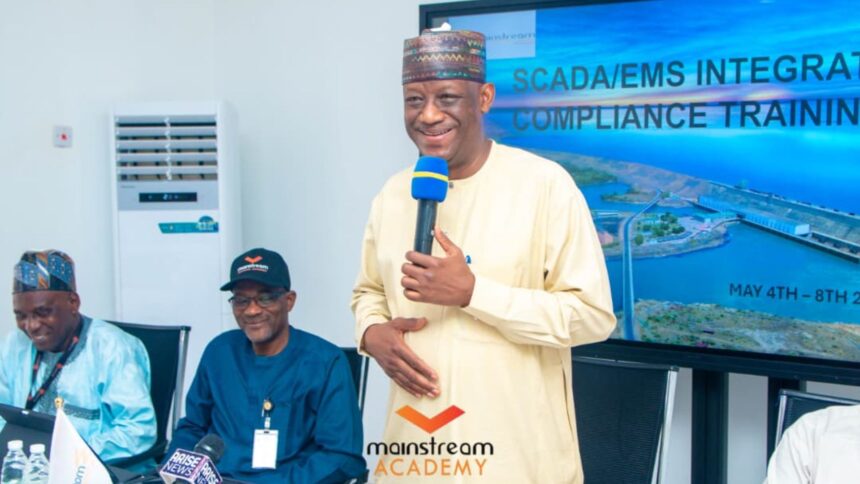
Mainstream Energy Solutions Limited (MESL), operator of the Kainji, Jebba, and Zungeru Hydro Power Plants, has commenced a sector-wide training program to accelerate the integration of power generation companies into the new Supervisory Control and Data Acquisition / Energy Management System (SCADA/EMS).
Olugbenga Adebola, Mainstream Head Corporate Communications made this known in a statement obtained by Advisors Reports on Monday.
According to him, the initiative directly supports compliance with the Nigerian Electricity Regulatory Commission’s Order No. NERC/2024/057 on the Mandatory Integration of Grid-Connected Generating Units.
He explained that the urgency of that transition is also emphasized by the Nigerian Independent System Operator (NISO) in its June 2025 directive to all GenCos, highlighting real-time visibility and automated dispatch via SCADA/EMS.
Adebola noted that compliance with those directives is expected to reduce system collapses, optimize load management, and improve power delivery to Nigerians.
Engr.Abdu Mohammed Bello, Managing Director and Chief Executive Officer of the Nigerian Independent System Operator (NISO) was present at the training venue at the Mainstream Academy at Kanji stated, “The integration of generation units into the national SCADA system is not optional.
“It is a critical operational and regulatory requirement for ensuring effective real-time monitoring, dispatch coordination, and the secure management of the national grid.
“As system operations become increasingly dynamic, the need for accurate visibility of generation assets and prompt operational response becomes even more essential’.
He further stated that, this is why initiatives such as this training are very important.
They build the technical capacity required for generating companies to meet these obligations while contributing meaningfully to the reliability and resilience of the grid.
“The value of this effort lies not only in compliance with regulatory provisions but also in the broader benefit of improving grid discipline and enhancing overall system performance’.
Mainstream Energy Solutions Limited in demonstrating preparedness is now leveraging its expertise and systems to build capacity across the generation segment and is delivering these trainings through Mainstream Academy, the company’s dedicated learning and innovation hub for power sector professionals.
The training covers SCADA architecture, remote terminal unit configuration, cybersecurity protocols, and real-time data exchange with the National Control Centre.
Mr. Usman Muhammad Umar, The Executive Director, Corporate Services, who is also the founder of the Academy stated, “The programme was conceived in response to the recent regulatory directives requiring all grid-connected generating units to be integrated into the national SCADA and EMS systems, a directive aimed at improving grid visibility, enhancing system coordination, and strengthening overall grid management.
“By equipping other generation companies with the skills and systems required for full SCADA integration the company is seeking to support the development of a smarter, more resilient national grid that is dependable for Nigeria’s industrial aspirations,” Umar said.
The MD of NISO further encouraged all generating companies that are yet to fully comply with the SCADA integration requirements to take immediate steps to do so.
“Compliance with these provisions is in the collective interest of the industry and is fundamental to achieving a more coordinated, stable, and efficient power system.
“The progress we seek in the sector depends on the willingness of all operators to align with the operational standards necessary for effective grid management,” the NISO MD said.
He also noted that NISO remained committed to supporting all initiatives that improve operational discipline, strengthen grid reliability, and advance the stability of the national power system.
According to him, through sustained collaboration, regulatory compliance, and technical excellence, we can collectively build a stronger and more dependable grid for Nigeria.