

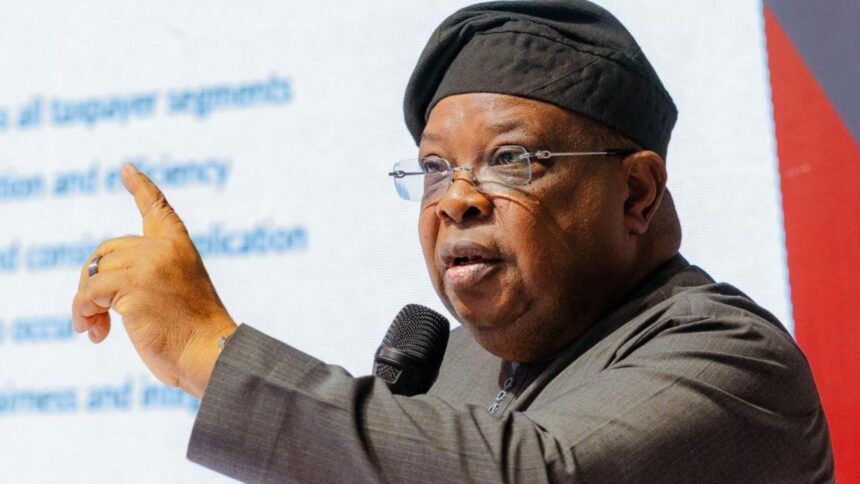
When the Minister-Designate for Power, Joseph Olasunkanmi Tegbe, told the Nigerian Senate that there was “no quick fix” to Nigeria’s electricity crisis, the statement stood out for departing from the familiar rhetoric that has long shaped public conversations about the sector.
In a country where ambitious declarations on power reform have often generated headlines faster than measurable outcomes, Tegbe’s remarks offered an early signal of a different leadership posture, one anchored less on spectacle and more on execution.
This matters because Nigeria’s power sector has spent decades trapped in cycles of overpromising and institutional under-delivery.
Successive reform efforts have come with bold projections, aggressive timelines, and repeated assurances.
Yet the sector continues to struggle with liquidity constraints, weak market confidence, transmission vulnerabilities, collection inefficiencies, infrastructure deficits, and operational instability.
Over time, the deeper casualty has not only been electricity supply, but institutional credibility.
Against that background, Tegbe’s emphasis on transparency, execution discipline, and operational realism should be read as a useful starting point, not a completed achievement. Nigeria’s electricity market does not suffer from a shortage of reform language.
The problems are already well known to policymakers, operators, investors, regulators, and consumers.
What has consistently undermined progress is fragmented implementation, weak accountability, poor coordination across the value chain, and the absence of sustained commercial discipline.
In that sense, Tegbe’s early posture appears calibrated toward restoring confidence in the system’s ability to execute before pursuing grand transformation narratives.
This is particularly important in a sector where investor confidence, market liquidity, and operational stability are deeply interconnected.
Markets respond not merely to ambition, but to predictability, governance credibility, and measurable execution.
Each part of the value chain affects the other. Generation without evacuation capacity creates waste. Tariff reform without metering creates distrust. Investment without payment discipline weakens confidence.
Policy statements without visible milestones deepen cynicism.
Financial sustainability will be one of the defining pillars of any credible reform effort.
For years, the electricity market has operated within a fragile commercial structure marked by accumulated debts, subsidy pressures, payment shortfalls, collection gaps, and uncertainty over cost recovery.
The long-term viability of the sector depends not only on expanding infrastructure, but on restoring commercial discipline and rebuilding confidence in the market itself.
This is where transparency becomes strategically important.
Transparent reforms reduce uncertainty, strengthen accountability, and give investors, operators, consumers, and policymakers a clearer basis for judging progress.
In practical terms, transparency is not merely a governance principle; it is an economic stabilisation tool. It can help rebuild trust in tariff decisions, improve confidence in sector data, and create a more disciplined environment for investment and performance monitoring.
Equally important is execution discipline. Infrastructure projects rarely fail only because funding is unavailable.
Many fail because coordination weakens, procurement becomes opaque, implementation drifts, and accountability is diluted.
In the power sector, credibility will not be rebuilt by rhetoric alone. It will require visible, measurable, and sustained improvements in the operating system of reform.
Nigeria’s power sector does not require another cycle of exaggerated optimism followed by institutional disappointment. It requires leadership capable of confronting difficult realities honestly while building a credible pathway toward operational stability, financial sustainability, and long-term reform credibility.
That is why Tegbe’s insistence on transparent reforms and execution discipline is important. Its significance will not lie in the statement itself, but in whether it becomes a governing method.
In a sector where credibility has become almost as scarce as stable electricity, restoring confidence in governance may be the first and most important reform of all.
Adeola Labzy writes from Abuja, Nigeria.