
…Engr. Mohammed, NISO CEO urges Energy Editors to promote transparent communication during system disruption
Oredola Adeola
The Nigerian Independent System Operator (NISO) has revealed that maintaining a perfectly balanced grid remains a complex operational challenge under largely manual operations and limited system visibility, as it continues to regulate Nigeria’s electricity system frequency within 50Hz ±2.5% by constantly matching power generation with consumption.
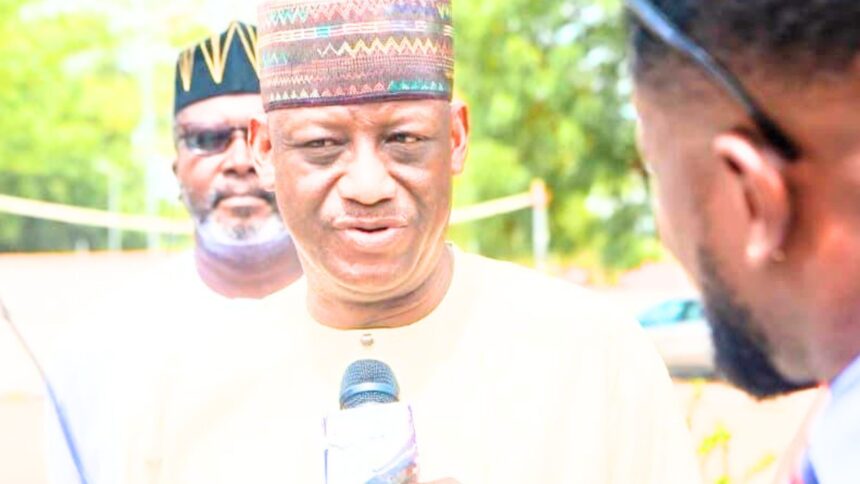
Engr. Abdu Bello Mohammed, Managing Director and Chief Executive Officer of NISO, disclosed this during an online media interaction with Energy Correspondents, media organizations, industry professionals, and heads of corporate communications from Distribution Companies (DisCos) across Nigeria.
The CEO therefore highlighted measures by NISO to modernize grid operations through automation and digitalization, improved network visibility via advanced monitoring technologies such as SCADA systems, sensors, and real-time data platforms, as well as stronger coordination across the electricity value chain to enhance national grid stability
He emphasised that system collapses can occur at any point within the power value chain—generation, transmission, or distribution—adding that NISO is committed to immediate response measures to ensure swift restoration whenever such disruptions arise.
According to him, the Nigerian National Grid is made up of interconnected high-voltage transmission lines, substations, and related infrastructure, and its frequency serves as a key indicator of the balance between electricity supply from generation companies (Gencos) and consumer demand through the transmission network.
He further noted that grid frequency, measured in hertz (Hz), is governed by the Grid Code, which sets the nominal operating standard at 50Hz, with system operators tasked with maintaining stability within an acceptable range of 50Hz ±2.5%.
Engr. Mohammed noted that although system operators continuously strive to balance generation and demand in real time, achieving perfect balance is extremely difficult due to largely manual operations and limited system visibility.
He added that the Nigerian National Grid is designed to operate within strict frequency boundaries of 51.25Hz as the upper limit and 48.75Hz as the lower limit, with any significant deviation beyond these thresholds capable of triggering a national grid collapse.
He further explained that NISO recognizes two types of system collapses: total system collapse, which results in a nationwide blackout when generation drops to zero megawatts, and partial system collapse, which affects only sections of the grid due to localized disturbances.
According to him, partial collapses are often caused by voltage and frequency instability, cascading failures, or tripping of generation, transmission, or distribution lines, any of which can escalate depending on severity into wider system disruptions.
He also noted that grid disturbances may appear as frequency fluctuations or sudden load drops, which do not always lead to collapse but remain critical indicators of system instability requiring close monitoring.
Earlier in his remarks to Energy Correspondents, Engr. Mohammed emphasized the need for transparent and accurate communication with the public to strengthen confidence in the power sector and minimize unnecessary panic during system disturbances or major industry developments.
He expressed concern over misleading reports and inaccurate headlines about NISO and the broader power sector, urging media professionals to verify information directly with the organization before publication.
Acknowledging previous gaps in consistent engagement with the media, he pledged to strengthen communication channels between NISO and journalists to ensure timely and accurate dissemination of information.
He also promised regular updates and interactions with the press and, in response to requests from media stakeholders, committed to organizing training sessions to deepen understanding of NISO’s operations and the technical aspects of grid management.
A representative from one of the Distribution Companies (DisCos) commended the Nigerian Independent System Operator (NISO) for its initiative in promoting detailed engagement with the media and other stakeholders across the electricity value chain, noting that such efforts would greatly improve effective and reliable communication with electricity consumers in Nigeria.
Concluding the session, NISO reaffirmed its commitment to strengthening collaboration with the media, stressing that it welcomes inquiries and encourages journalists to seek clarification directly from the organisation or consult its official website at NISO official website for accurate and up-to-date information.