
Oredola Adeola
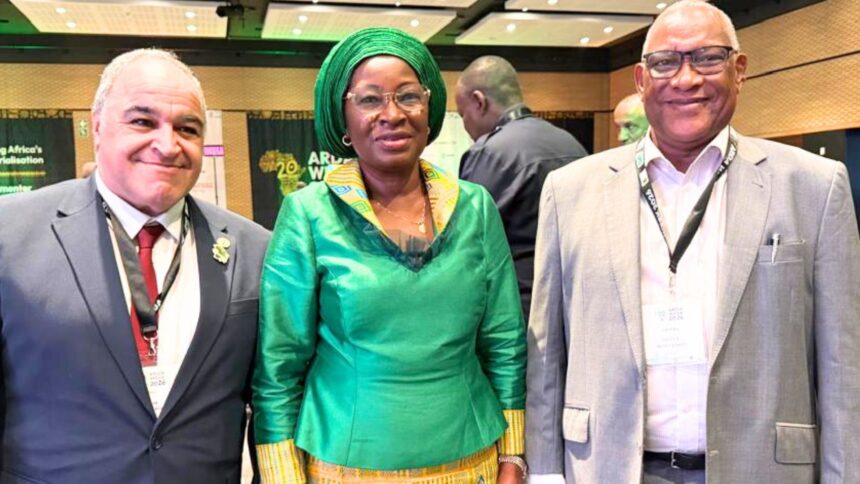
Engr. Saidu Mohammed, Authority Chief Executive of the Nigerian Midstream and Downstream Petroleum Regulatory Authority, has advocated a step-by-step alignment model for fuel specification harmonisation across Africa, enabling countries to transition at a pace that reflects their domestic realities without disrupting supply chains or imposing additional cost burdens on consumers.
The ACE made this known in his comment while speaking at the panel session, “Policy Pathways to Fuel Specification Harmonisation: Regulation, Progress, and Ambition,” during African Refiners and Distributors Association Week 2026 in Cape Town, ON Monday.
Advisors Reports gathered that at the Africa-wide level, driven by ARDA and supported by the African Union, a phased AFRI standards roadmap (AFRI 1–6) was developed, with earlier targets of AFRI-4 by 2020 and AFRI-5 by 2030, while more recent discussions position AFRI-6 (10 ppm sulphur) as the ultimate goal by around 2030.
Arguing over the phased roadmap but tied to fixed deadlines Mohammed said while harmonisation remains a strategic continental goal, a “one-size-fits-all” framework is impractical given disparities in regulatory capacity, infrastructure, and refining capabilities across African countries.
He advocated for a step-by-step alignment model as a more pragmatic approach, rather than relying on rigid targets that fail to reflect market realities.
“Harmonisation must be pragmatic and context driven. We must align ambition with execution realities,” he stated.
Mohammed highlighted Nigeria’s regulatory direction under the NMDPRA, noting ongoing efforts to tighten fuel quality standards while preserving supply stability and market efficiency.
He emphasised that effective regulation must balance environmental objectives with affordability and energy access, particularly in developing markets.
He identified key enablers for successful harmonisation to include stronger inter-regulatory collaboration, policy clarity and consistency, sustained investment in refining and distribution infrastructure, and realistic transition timelines.
According to him, improved alignment of fuel specifications will help reduce market distortions, curb cross-border arbitrage, and enhance regional trade, while supporting the gradual transition to cleaner fuels across the continent.
Mohammed also pointed to growing refining capacity in Africa, particularly in Nigeria, as a critical factor in advancing harmonisation efforts and reducing reliance on imported petroleum products.
ARDA Week 2026, marking two decades of Africa’s downstream industry coordination, convened regulators, policymakers, and industry leaders to examine pathways for a more integrated and resilient energy market.