

Afeez Olawoyin
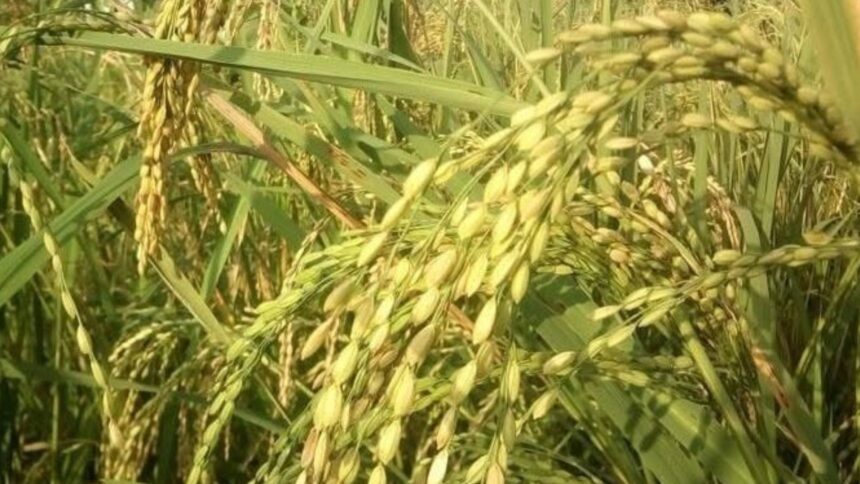
Hamdafat Farms and Foods Ltd, the agribusiness subsidiary of Hamdafat Global Limited, has announced the acquisition of 20,000 hectares of agricultural land along the Lagos–Ibadan Expressway as part of its long-term strategy to expand commercial rice production and strengthen Nigeria’s food security.
Afeez Olawoyin, Corporate Communications Manager, Hamdafat Global Ltd. made this known in a statement obtained by Advisors Reports.
The landmark investment, according to him, represents one of the company’s most ambitious agricultural development initiatives and underscores its commitment to increasing local food production, reducing dependence on imported rice, and supporting the Federal Government’s drive towards agricultural self-sufficiency.
According to the company, the project will be developed in phases, combining modern mechanised farming techniques with sustainable agricultural practices to maximise productivity while preserving environmental resources.
The company said, “The development will include extensive rice cultivation fields, irrigation infrastructure, storage facilities, processing units, farm access roads, and administrative support centres.
Speaking on the development, the management of Hamdafat Farms and Foods Ltd described the acquisition as a significant milestone in the company’s growth journey.
“This investment reflects our confidence in the future of Nigerian agriculture. Our objective is to build a modern rice production ecosystem that supports food security, creates employment opportunities, and contributes meaningfully to national economic development. We believe agriculture remains one of Nigeria’s greatest opportunities for sustainable growth.”
The company noted that the strategic location of the farmland along the Lagos–Ibadan Expressway offers important logistical advantages, enabling efficient transportation of harvested rice to major commercial centres, processing facilities, wholesalers, retailers, and consumers across Lagos, Ogun, and neighbouring states.
The large-scale farming project is expected to incorporate modern agricultural technologies, including mechanised land preparation, precision planting, improved seed varieties, irrigation systems, crop monitoring, and efficient harvesting methods.
These innovations are intended to improve yields, minimise production losses, and enhance operational efficiency.
In addition to cultivating rice, Hamdafat plans to establish integrated post-harvest infrastructure, including drying facilities, milling operations, warehousing, packaging centres, and quality assurance laboratories.
The integrated value chain is expected to improve product quality while increasing the availability of locally processed rice in Nigerian markets.
The project is also expected to generate substantial socio-economic benefits for surrounding communities.
During both the construction and operational phases, employment opportunities will be created for engineers, agricultural specialists, machine operators, technicians, extension officers, logistics personnel, administrative staff, and seasonal farm workers.
Beyond direct employment, Hamdafat intends to develop collaborative programmes with local farming communities through out-grower schemes, technical training, access to improved seedlings, and agricultural extension services.
These initiatives are designed to empower smallholder farmers while strengthening local agricultural productivity and improving household incomes.
Environmental sustainability will remain a central component of the project. The company plans to implement responsible land management practices, efficient water utilisation, soil conservation measures, and environmentally sustainable farming techniques aimed at preserving natural resources for future generations.
Industry stakeholders have welcomed continued private-sector investment in commercial agriculture, noting that large-scale integrated farming projects can significantly improve domestic food production, stabilise supply chains, reduce post-harvest losses, and stimulate rural economic development.
As part of its broader expansion strategy, Hamdafat Farms and Foods Ltd will continue exploring opportunities in crop production, food processing, agricultural technology, logistics, and value-added manufacturing. The company believes that building an integrated agricultural value chain is essential to meeting Nigeria’s growing food demand while enhancing competitiveness within the agricultural sector.
Olawoyin further disclosed that the acquisition of 20,000 hectares marks another important chapter in Hamdafat’s long-term vision of becoming a leading agribusiness enterprise with the capacity to deliver high-quality agricultural products, create sustainable employment, and contribute to Nigeria’s economic diversification.
He emphasised that with strategic investment, innovation, and a strong commitment to sustainable agriculture, Hamdafat Farms and Foods Ltd is positioning itself to play a significant role in the future of rice production and the continued development of Nigeria’s agricultural economy.