
Chevron Nigeria Limited, in partnership with NNPC Gas Infrastructure Company Limited (NGIC) has signed a Network Entry Agreement under Nigeria’s Gas Transportation Network Code (NGTNC) to inject 350MMscf/d of gas into the domestic Escravos–Lagos Pipeline System, significantly boosting supply to power plants and industrial users.
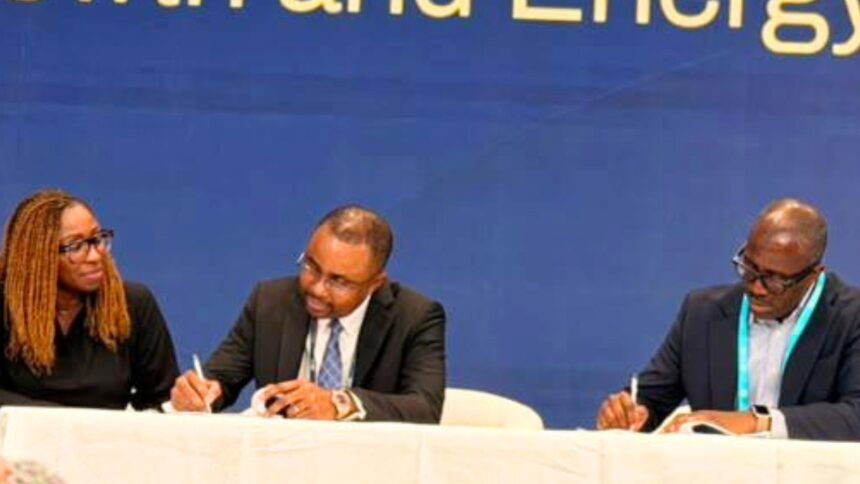
The agreement was executed by Segun Kuteyi, Director and Chief Operating Officer (Midstream) at Chevron Nigeria Limited, alongside a representative of NGIC, in Abuja on Tuesday on the sidelines of the 25th NOG Energy Week.
Jim Swartz, Chairman and Managing Director, CNL, in his comment on the deal revealed that the agreement underscores the NNPCL/CNL Joint Venture’s commitment to safe and reliable gas delivery while supporting Nigeria’s broader gas development.
“By strengthening the interface between CNL’s Escravos Gas Plant and NGIC’s transportation network, we are helping to enhance energy security, infrastructure efficiency and long-term value creation for Nigeria,” he said.
According to Olusoga Oduselu, Chief Corporate Affairs Officer, CNL, the agreement provides contractual framework to govern safe, efficient gas delivery from the NNPCL/CNL JV to NGIC’s pipeline network in compliance with the Nigerian Gas Transportation Network Code.
He confirmed that the NEA establishes the contractual framework required under the Nigerian Gas Transportation Network Code to govern gas delivery operations and associated interfacing / information exchange between CNL’s Escravos Gas Plant and NGIC.
Oduselu further stated that the development of Nigeria’s uniform NEA framework places Nigeria among the league of countries whose central gas pipeline transporters operate under a standardized framework governing gas injection and offtake.
“By establishing this common gas injection and offtake framework, the NEA reinforces the critical gatekeeping role of the gas Network Operator, NGIC, and delivery facility operators — like CNL, as operator of the NNPCL/CNL Joint Venture— in ensuring that incoming gas does not compromise the safety, integrity, or efficiency of the national gas network,” he noted.