

CBN should create a financing window that provides concessionary, long-term funds for decarbonisation – Dr. Yusuf
… with PPP, blended financing, we can scale investment without deindustrialising the economy- Rev. Adebawo
… financial institutions now monitoring ESG compliance to determine access to capital- Dr. Nwoga
Oredola Adeola
Dr. Muda Yusuf, Rev. Sola Adebawo and Dr. Wancelaus Nwoga have called for stronger financing mechanisms, targeted incentives and deeper policy coordination to accelerate decarbonisation in Nigeria’s extractive sector, warning that without deliberate action, the country risks falling behind in the fast-evolving global energy transition landscape.
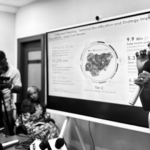
The experts made these remarks during a panel session at the 2026 Oriental News Conference held in Lagos, themed “Carbon Capture: Accelerating Decarbonisation Initiatives in Nigeria’s Extractive Industry Through Broad Regulatory Reforms,” with discussions centred around the sub-theme “Addressing Finance Challenges, Investment Strategies, Operational Sustainability and Climate Change Management.”
Dr Yusuf, Chief Executive Officer of the Centre for the Promotion of Private Enterprise (CPPE), on his part urged the Central Bank of Nigeria (CBN) to create a dedicated financing window within its monetary policy framework to support Nigeria’s decarbonisation agenda and address industry key challenges.
He emphasised that the noting that such an intervention would strengthen the business case for carbon capture and encourage wider private sector participation.
Dr. Yusuf while acknowledging that the Central Bank of Nigeria (CBN) has made significant progress in stabilising the economy and maintaining macroeconomic balance, stressed the need for the apex bank to go beyond this by supporting emerging priorities such as decarbonisation in the extractive industry.
He argued that the nature of investments required for carbon capture makes them unsuitable for conventional commercial bank financing, calling instead for a dedicated CBN intervention window that would provide concessionary, long-term funding tailored to the sector.

The CEO of CPPE also advocated complementary fiscal measures, including strengthened tax credits for companies actively investing in decarbonisation initiatives, as well as targeted subsidies to lower entry barriers.
According to him, such incentives are critical in shaping investor behaviour, noting that clear policy signals would help direct capital towards carbon capture and broader low-carbon investments.
Rev. Adebawo, CEO of Hyphen Partners Ltd., noted that making decarbonisation commercially viable would require stronger collaboration between government and the private sector through public-private partnership (PPP) models.
He explained that across the global supply chain, spanning finance institutions and export markets, decarbonisation has increasingly become an imperative, creating both pressure and opportunity for Nigeria’s extractive industry to align with emerging standards.
Adebawo further highlighted the availability of innovative financing structures to support decarbonisation projects, including targeted fiscal incentives embedded in the Petroleum Industry Act (PIA), which provide a policy framework to attract investment from the government side.
Citing practical examples, he pointed to the Ajaokuta-Kaduna-Kano (AKK) gas pipeline project as a model of blended financing involving the Nigerian National Petroleum Company (NNPC), contractors, and commercial lenders, demonstrating how large-scale energy infrastructure can be funded while supporting lower-carbon energy transition through increased gas utilisation.
He also referenced the Incorporated Joint Venture (IJV) financing model under the PIA, as well as the Midstream and Downstream Gas Infrastructure Fund, noting that these mechanisms are designed to catalyse private sector participation in the gas value chain and can be leveraged to unlock commercial opportunities in decarbonisation initiatives.
He further stressed that decarbonisation is both an economic and infrastructure imperative, noting that Nigeria cannot operate in isolation within an increasingly interconnected global energy landscape. As an ambitious economy, he said, the country must align its interests with global decarbonisation conversations to remain competitive.
According to him, Nigeria’s 2035 transition ambitions are realistic, but achieving them will depend less on bold declarations and more on disciplined implementation of clear policies and institutional frameworks.
He pointed to existing policy instruments, including the Climate Change Act of 2021, the Energy Transition Plan, provisions within the Petroleum Industry Act (PIA), the Nigerian Upstream Petroleum Regulatory Commission (NUPRC) and broader energy sustainability and decarbonisation platforms, are critical foundations already laid to guide the country’s low-carbon pathway.
He emphasised that Nigeria’s transition strategy is not about deindustrialisation, but rather about balancing growth with sustainability. In this context, gas remains a critical bridge fuel, enabling the country to advance decarbonisation objectives while sustaining industrial development.
Dr. Wancelaus Nwoga, Head of Compliance at DataPro Limited, noted that interest in Environmental, Social and Governance (ESG) standards is gaining momentum, with financial institutions increasingly scrutinising the activities of companies seeking funding, particularly their alignment with decarbonisation goals.
He explained that the scale of investment required for energy transition is significant, which is why global and national targets, such as 2030 and 2060, are being pursued through phased and gradual programmes rather than immediate full transition to net zero.
Nwoga emphasised the need for balance, stressing that while Nigeria must continue to expand energy production to drive economic growth, this must be carefully aligned with a structured and gradual decarbonisation pathway.
He further disclosed that DataPro Limited is promoting stronger synergy between the public and private sectors to deepen ESG compliance and decarbonisation efforts, noting that compliance frameworks in the public sector remain underdeveloped and require institutional collaboration.
According to him, there is also a need to explore alternative financing mechanisms, particularly securitisation, which remains largely untapped in the region despite significant infrastructure financing gaps.
He expressed optimism that, with improved collaboration and financial innovation, Nigeria will be better positioned to address funding challenges in the oil and gas sector, especially in advancing decarbonisation initiatives.