
….Adult Love by Tanure Ojaide, 2000 Blacks by Ajibola Tolase, 9 other authors eye $100,000 award
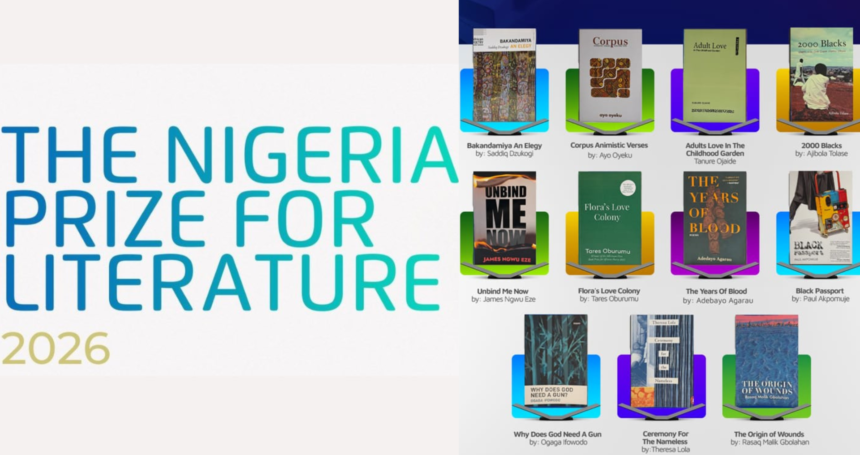
11 poetry collections, including Adult Love by Tanure Ojaide, 2000 Blacks by Ajibola Tolase, and Unbind Me Now by James Ugwu Eze, have been longlisted from 223 entries for The Nigeria Prize for Literature in a high-stakes contest, where the eventual winner will receive a $100,000 prize.
Sophia Horsfall, General Manager, External Relations and Sustainable Development at Nigeria LNG Limited, disclosed this in a statement obtained by Advisors Reports.
Advisors Reports gathered that the prize, now in its 22nd year, is sponsored by NLNG and rotates annually across four genres: prose fiction, poetry, drama and children’s literature, with the 2026 edition dedicated to poetry.
Prof Akachi Adimora-Ezeigbo, Chairman of the Advisory Board for the Prize, who announced this revealed that the selection marks a significant milestone in this year’s competition and reflects the exceptional quality, creativity and diversity of contemporary poetry.
Other longlisted titles are Bakandimiya by Saddiq Dzukogi; Black Passport by Paul Akpomuje; Ceremony for The Nameless by Theresa Lola; Corpus: Animistic Verses by Ayo Oyeku and Floral’s Love Colony by Tares Oburumu.
Others are The Origin of Wounds by Malik Gbolahan; The Years of Blood by Adebayo Agarau; and Why Does God Need a Gun by Ogaga Ifowodo.
Professor Adimora-Ezeigbo, in her remark, described the announcement as an important stage in the 2026 edition of the arguably African biggest and most prestigious literary Prize.
She noted that the collections demonstrate the remarkable capacity of poetry to illuminate human experience through thoughtful reflection, cultural memory and artistic expression.
Prof Adimora-Ezeigbo added that the works revisit history while interrogating dominant historical narratives and exposing the forces that shape collective identities and social relations.
She stated that despite their varied emphases, the books share a commitment to exploring the endurance of individuals and communities in the face of violence, oppression, and social fragmentation.
Commenting on style and language, Prof. Adimora-Ezeigbo said the books display an impressive diversity of poetic techniques marked by lyrical intensity, symbolic depth, and artistic innovation.
“Many employ densely poetic, allegorical, and elegiac modes that invite multiple layers of interpretation, while others draw extensively on folklore, oral traditions, and contemporary realities to create a compelling fusion of past and present.
Their language is generally fluid, evocative, and aesthetically refined, relying on vivid imagery, emotional resonance, and intellectual sophistication to communicate complex ideas.
These works demonstrate how poetic language can illuminate social realities; challenge established perspectives and give voice to both individual and collective experiences.
“The next stage will demand a closer reading of each work, with attention to language, form, originality and lasting literary value,” she stated.
She also commended the judges for their work and reaffirmed the Advisory Board’s commitment to a credible process, literary excellence and the promotion of a strong reading culture.
The NLNG noted that the announcement of the 11-title longlist formally opens the next phase of the shortlist of three in August and possible announcement of the winner in October.