
…powering 2,500 households in Rubochi with 900 kWp, 300 homes in Ikwa with 100 kWp
Precious Ademiloye
The Rural Electrification Agency (REA), in partnership with the Government of the Republic of Korea, has delivered a 1MW combined-capacity clean energy project under the Korean Energy Project (KEP), comprising a 900 kWp solar hybrid facility in Rubochi now powering about 2,500 households and institutions, and a 100 kWp system in Ikwa serving over 300 households, both in Abuja.
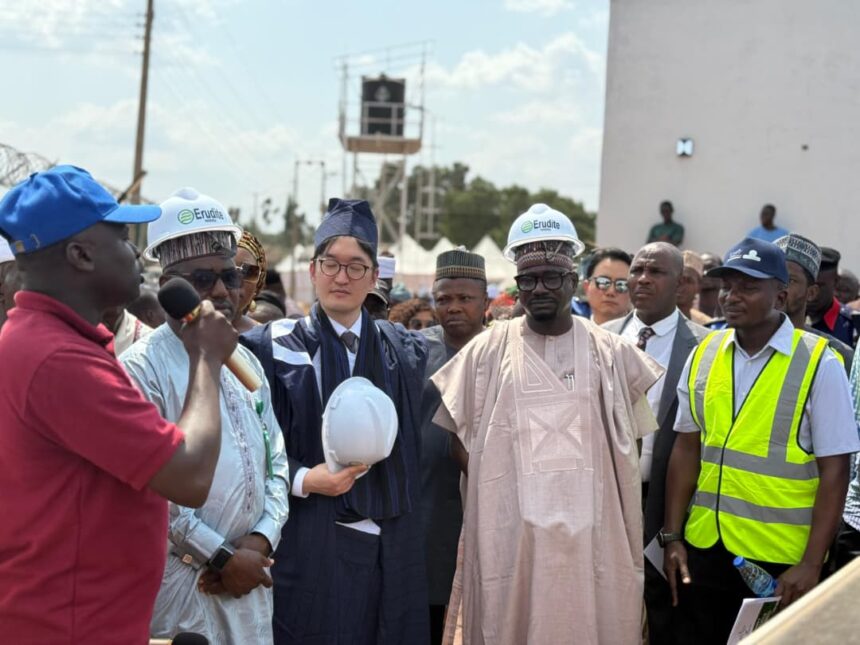
These 3 mini-grids, situated strategically in the 2 communities were commissioned on Thursday under the Korean Energy Project (KEP), which is one of the most impactful and timely Official Development Assistance (ODA) interventions received by the Nigerian Government.
Advisors Reports gathered that the power projects are fully operational and now providing stable, reliable electricity to households, small businesses, schools, healthcare facilities, and commercial clusters, 24/7.
Designed as a fully integrated energy solution, the project combines robust solar generation, a modern distribution network, advanced metering infrastructure, and household energy appliances, including lighting points and sockets, enabling immediate productive use of electricity.
At the national level, an advanced energy management system has been deployed at the REA headquarters, providing real-time operational visibility and enabling continuous technical oversight and support to the Renewable Energy Service Companies (RESCOs) responsible for operations and maintenance.
Through the REA’s established Rural Electricity Users Cooperative Societies (REUCS) framework, the Agency has worked closely with RESCO operators and community stakeholders to promote responsible energy use, strengthen local ownership, and address issues such as vandalism and inefficient consumption.
The project benefited from exemplary community buy-in and support, made possible by the leadership of the Zaki of Rubochi.
The Nyesom Wike, Minister for the FCT, represented by the Minister’s Chief of Staff, Hon. Chidi Amadi, commended the REA for aligning its interventions with the ongoing development effort of the FCT administration.
While reiterating the Federal Government’s commitment to alleviating energy poverty, Chief Adebayo Adelabu, Minister of Power, represented by the Ministry’s Permanent Secretary, Engr. Mahmuda Mamman explained that “Distributed renewable energy remains a critical pillar in closing the access gap efficiently and sustainably.
By leveraging innovation, public-private collaboration, and institutional coordination, we are driving systemic reforms that strengthen grid resilience while expanding off-grid solutions.
Our goal is clear: reliable, affordable, and clean energy for all Nigerians, powering economic growth, job creation, and national development.”
Engr. Abba Aliyu, MD/CEO of the REA explained that “at the Rural Electrification Agency, we are intentional about deploying clean, reliable, and community-driven energy solutions that catalyze socio-economic transformation.
“This intervention is not just about megawatts installed, it is about livelihoods supported, emissions reduced, and local ecosystems strengthened,” he said.
Having enjoyed stable electricity for 5 months through the mini grid, prior to the commissioning date, the HRH Sa’Rubochiyi of Rubochi, Alhaji Muhammed Ibrahim, explained that “for years, our people struggled with unreliable power, limiting our businesses, our children’s education, and even access to basic services.
“This solar project has brought light, but more importantly, it has brought hope. Our traders can now extend their working hours, our youths can learn with better tools, and our health services can function more effectively,” he said.
Namgoong Tak, the Charge d’ Affaires, Embassy of the Republic of Korea, who represented the Korean Government, expressed delight with the collaboration between Nigeria and Korea, as well as the REA’s sustained dedication to the delivery of the interventions.
The REA has therefore called on the people of Rubochi and Ikwa to take full ownership of these assets, protect them, utilize them productively, and support the systems that will ensure their long-term success.