
… set to deploy IoT, telemetry systems by end of 2026 to enable near real-time market settlements
Oredola Adeola
The Nigerian Independent System Operator (NISO) has reported monthly transmission losses of ₦3.525–5.64 billion between April 2025 and April 2026, as inefficiencies persist despite ongoing reforms
Meanwhile, following the implementation of new reforms by NISO’s management board, the transmission loss factor (TLF) has fallen from 10%—which previously cost the sector ₦5–8 billion monthly—to 7.05%, as the operator works toward the 5–6% target
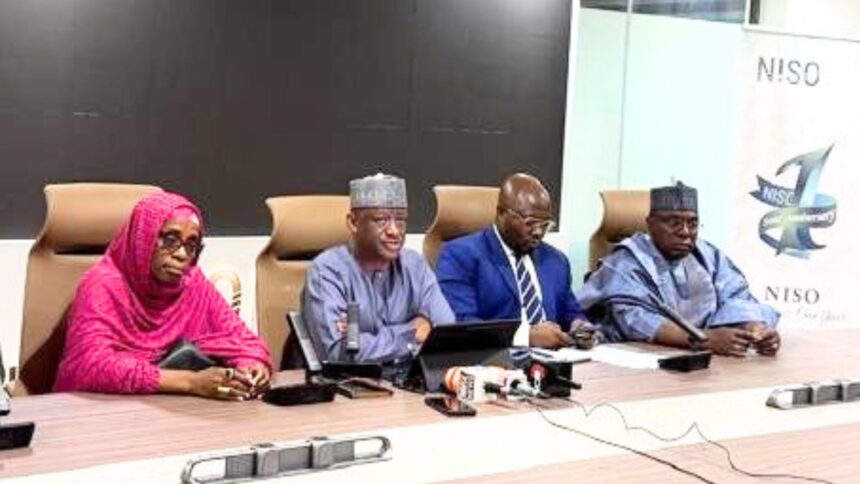
This was among the key points highlighted by Engr. Abdu Bello, Managing Director/CEO of NISO, as he presented a detailed scorecard of reforms and operational milestones during NISO’s first anniversary celebration at its Utako, Abuja headquarters, on Wednesday.
Bello noted that the TLF at inception was alarmingly high, placing a significant financial burden on the power sector.
As part of reforms introduced under his leadership, he stated that NISO has begun implementing operational measures aimed at achieving the Nigerian Electricity Regulatory Commission’s (NERC) 2026 target of below 6.5% TLF, recoverable from customers based on approved Transmission Service Provider (TSP) revenue requirements.
“One of the greatest problems we encountered at the inception of NISO was a very high transmission loss factor, close to 10%, costing about N5–8 billion monthly. We are working to reduce it further to around 5–6% to meet the regulator’s target,” he said.
Bello highlighted NISO’s core mandate covering system operations, market administration, planning, and enforcement of grid codes and market rules, noting its central role in Nigeria’s power sector reform.
“It is about ensuring that our grid is stable, our market is credible, and our planning is coordinated so that electricity effectively supports economic growth,” he said.
On grid monitoring and control, Bello stated that NISO is accelerating digitalisation through the deployment of Supervisory Control and Data Acquisition (SCADA) and Energy Management Systems (EMS) for real-time visibility.
He added that NISO has also reached advanced stages in deploying telemetry systems across electricity trading points.
“It’s a work in progress, but we are seeing tangible improvements in our ability to monitor, manage, and operate the national grid efficiently,” he added.
NISO in its commitments emphasised that deploying telemetry systems and Internet-of-Things (IoT)-based metering infrastructure across generation units, transmission lines, and substations will provide full visibility of the national grid from generation through transmission, substations, and distribution.
Abdu Bello, NISO Managing Director/CEO, stated that by the end of the year, the project is expected to provide a comprehensive real-time view of the entire grid system, enabling near real-time electricity market settlements and significantly improving operational efficiency.
“Currently, our system operators are largely operating manually. With telemetry, we can achieve hourly settlements or even real-time market operations,” Bello said.
On addressing persistent grid collapses, Bello noted that the Nigerian Electricity Regulatory Commission (NERC) has directed distribution companies (DisCos) to install IoT meters on their 33 kV and 11 kV feeders, an ongoing project that will enhance system visibility and management.
He explained, “Once fully deployed, NISO will have end-to-end visibility from generation through transmission and distribution to eligible customers, allowing operators to manage the grid more effectively in real time.”
Bello also highlighted NISO’s collaboration with generation companies (GenCos), DisCos, and other market players to implement the free-governor mode of operation in generating units, aimed at improving frequency response.
“Compliance with the new market rules has already improved system frequency and overall grid reliability, with enforcement actions ongoing for defaulters,” he added.
Additionally, NISO plans to introduce grid “islanding,” a strategy that segments the national grid to prevent widespread outages.
Bello explained, “Disturbances in one segment will not cascade across the entire grid, significantly reducing the risk of total system collapse.”