
… discover alternative cooking hacks as energy audit reveals Band B, C users consume less than 1kW for major meals
… electric cooker, charcoal sellers record surge in demand
Precious Ademisoye
With the price of cooking gas hitting ₦2,000 per kilogram in October, many Nigerian households and small businesses are turning to electric cookers and charcoal as cheaper alternatives, amid a modest improvement in power supply across Lagos, Ogun, and other states.

According to Advisors Reports, cooking gas prices have fluctuated sharply through 2025, from a low of ₦1,350–₦1,400 in January to ₦1,577 in April, rising further to ₦1,648 in July, before briefly dipping to ₦1,280 in August and then surging again to ₦2,000 in October.
The sustained price hike, the report noted, is largely driven by market manipulation and speculative pricing by middlemen and retailers, rather than supply shortages.
As of the time of filing this report, retail prices in Lagos range between ₦1,500 and ₦1,800 per kilogram, while in Ogun and Oyo States, prices vary between ₦1,400 and ₦1,800, depending on location.
This steep rise has forced many families to adjust their cooking habits to manage household expenses.
In Lagos, Subair Adetowunmi, a resident of Oko Oba, said switching to electric cooking has become the more economical option for his family.
“I would say right now, using an electric cooker is cheaper than gas,” he said. “We are on Band C and have power for about 10 to 12 hours daily — from 2am to 6am and again from 6pm to midnight — so it’s convenient to cook when the light is available.”
Adetowunmi explained that his household, which previously relied on gas supplemented by a hotplate, now prefers electric cooking entirely.
“We pay about ₦1,000 for 26 units of electricity. If managed well, that lasts long enough for cooking. I’m currently buying gas at ₦1,700 per kilogram, so instead of that, I’d rather spend the money on electricity,” he added.
In Ondo State, Mrs. Bose said she now balances between gas and hotplate use to cope with rising costs.
“Before gas prices went up, I used both gas and hotplate, but only occasionally, mostly for cooking beans,” she explained. “Now that gas costs ₦1,600 per kilogram, I use the hotplate more often.
“We usually have electricity in the morning, and I’m on Band C, so I cook early. Using the hotplate takes about four units, which is manageable. I use it in the morning and gas in the evening” she said.
For Sharon Akinola, a resident of Ajah, Lagos, electric cooking has become the more economical choice.
“I primarily use an electric cooker, though I’ve used gas before. With gas at ₦1,800 per kilogram, electric cooking is more cost-efficient now,” she said.
“One kilogram of gas lasts only two days for us, but the hotplate takes about four units per meal, around ₦800 for two days on Band C — which is still cheaper.
“Electricity lasts us four days, while gas barely lasts two,” she said.
However, not every household can embrace the electric or charcoal switch. For Lagos resident Chinyere Shoyombo, who is on Band B prepaid electricity, using an electric cooker isn’t even an option.
“I still rely on gas.
“Gas here costs about ₦1,500 per kilogram, which is high, but still more practical for me. Besides, hotplates are banned in my house now,” she said.
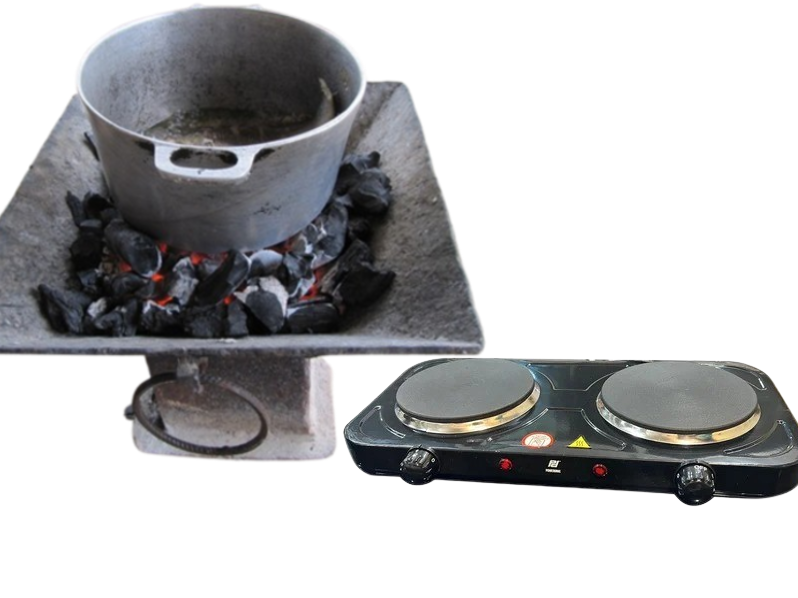
The trend is also being reflected in rising sales of electric hotplates and cookers across retail outlets and local markets.
At Zellers Supermarket, a sales attendant confirmed that hotplates, priced around ₦15,000, have seen “steady demand in recent months,” prompting regular restocks.
Similarly, a store attendant at Justrite Stores, Orelope–Egbeda area of Lagos, confirmed that hotplate prices now range between ₦15,000 and ₦16,000, depending on the brand.
In the Festac axis, secondhand appliance dealer Mr. Uche John noted a surge in demand for used (“tokunbo”) hotplates.
“We sell original hotplates between ₦10,000 and ₦15,000, depending on what customers want,” he said. “More people are buying now because gas has become too expensive.”
At Oshodi, another trader, Mr. Eze, confirmed the same trend.
“Hotplates go for ₦17,500 to ₦18,000, and we’re selling more than before. Many people are even repairing their old ones instead of buying gas cylinders,” he noted.
Meanwhile, charcoal has also become another vital fallback option for many households, especially in areas where electricity supply remains unreliable or costly.
For low-income families, the rising cost of cooking gas has pushed many backs toward charcoal and firewood, a shift that experts warn could worsen environmental degradation and public health challenges.
In Ibadan, Temitope Oginni shared how her family has adapted to the surging gas prices.
“Right now, using charcoal is the better choice for us,” she said. “A bag of charcoal costs ₦7,000 here, but most people buy it in smaller quantities — ₦200 per bundle.
“Two bundles for ₦400 last us for a day’s cooking, unless we’re cooking beans, which takes about three bundles.
“My mum used to buy both gas and charcoal, but now she only buys charcoal because gas is ₦1,600 per kilogram.”
Charcoal sellers across states also report steady demand. In Ota, Ogun State, Mrs. Abake confirmed that a bag of charcoal now sells for ₦7,600, noting that “most customers buy in smaller portions, half or quarter bags, because it’s cheaper that way.”
Similarly, in Ibadan, Oyo state, Mrs. Bisi said, “A bag sells for ₦7,000 depending on location, but sales have picked up recently because more people can no longer afford gas.”
Energy analysts warn that if the surge in gas prices persists, Nigeria’s clean energy transition could face a major setback, as more households revert to charcoal and firewood, increasing deforestation and air pollution across communities.