
“Africa must own its energy destiny” – Falade
… urges reduced bureaucracy, stronger security, PPP to boost Nigeria’s oil & gas competitiveness
Oredola Adeola

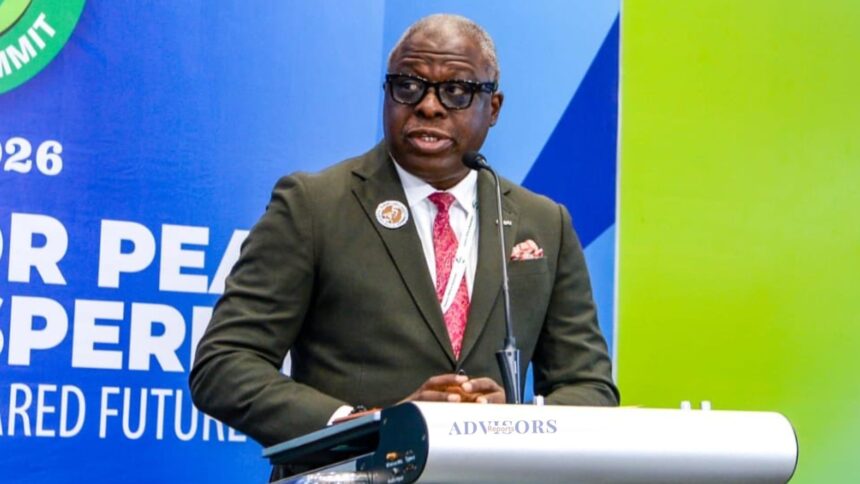
Adegbite Falade, Chairman of IPPG and CEO of Aradel Holdings, has identified self-sufficiency, national value creation, and industry-wide collaboration as key pillars for Nigeria’s energy future, stressing that Africa countries — and Nigeria in particular — must take ownership of their energy destiny to ensure peace and drive prosperity.
He stated this in his remark at the opening ceremony of the 2026 Nigeria International Energy Summit (NIES) held at the Banquet Hall of the State House, Abuja, on Tuesday.
According to him, the global energy systems are being reshaped by conflict, by shifting
alliances, and by the growing realities of energy insecurity.
“These forces remind us of a simple truth. In today’s interconnected world, energy has no borders. The shocks in one region ripple across continents, and Africa and indeed Nigeria are not shielded from these pressures.
He explained that the Summit’s theme: “Energy for Peace and Prosperity: Securing Our Shared Future,” is timely and appropriate, challenges industry players to think beyond the present and to confront the deeper question of how we build stability and prosperity through our God-given energy resources.
“It calls on us to look inward and shape our own path and to also design an energy future that is rooted in economic growth and development.
“And that journey must begin now” Falade noted.
The CEO of Aradel Holdings noted that Nigeria must build an Energy industry that can sustain itself, deliver real and lasting value to all Nigerians, and grow through collaboration rather than fragmentation.
“The future of our sector lies not in the old model of extracting and exporting raw hydrocarbons, but in creating in-country value that fuels our economy and increasingly contributes to GDP growth.
“This requires an industry that is efficient, competitive, well-governed, and resilient. It also requires scale, which we can be achieved through deliberate collaboration and consolidation across operators, service companies, regulators, and investors.
Falade noted that despite significant progress across the energy value chain in 2025, substantial work remains for stakeholders and government to build a truly self-sufficient industry that consistently delivers value to the nation.
IPPG therefore noted that for the oil and gas industry will deliver the much-needed peace and prosperity, there’s need to reduce bureaucracy, streamline industry fees & related charges,
to ensure operators remain competitive.
According to him, Nigeria’s oil and gas industry currently operates at a cost premium of about 40 percent compared with other non-shale jurisdictions.
He said, “Strengthen security across the Niger Delta, as the growing reliance on private security arrangements continues to increase Nigeria’s already high unit operating costs relative to peer countries.
“We have to pursue creative public-private partnerships that will build out the nation’s midstream infrastructure. Without this, we will not bridge the massive gap to potential in the industry’s contribution to GDP growth.
“We must also address the matter of access to long‑term, affordable capital, which is essential
for unlocking Nigeria’s hydrocarbon potential.
“The government must also ensure policy stability and adopt competitive fiscal frameworks that support resource monetization and stimulate industrial growth,” he said.
Falade stated that stakeholders must build investor confidence by ensuring the full and effective implementation of the Petroleum Industry Act, backed by strong, transparent, and predictable regulatory institutions.