
NERC reviewing regulations to allow private investment in national grid – Adelabu, Power Minister
… World Bank, JICA derisk Nigeria’s renewable energy programmes with over $940 million

Oredola Adeola
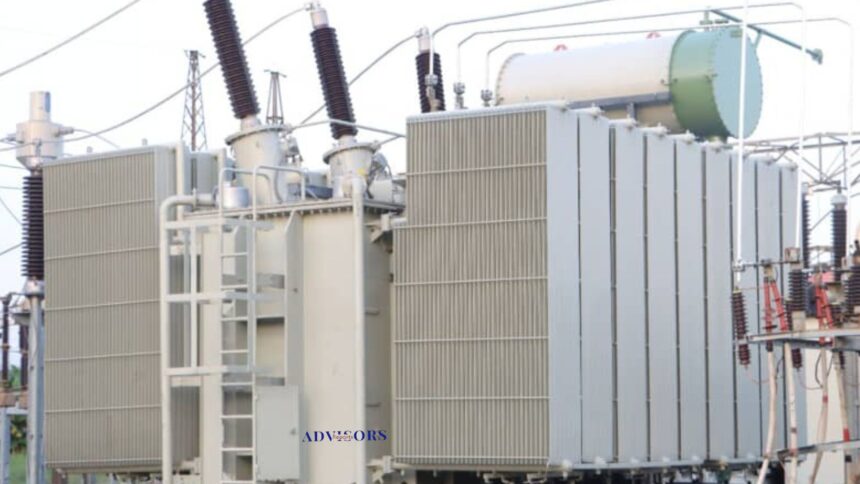
The Federal Government has introduced a willing-buyer mechanism for transmission infrastructure, allowing private sector participation through a financing framework that enables investment in specific load centers, substations, and transformers.
Chief Adebayo Adelabu, Minister of Power, confirmed that the government is working with NERC to review regulations to encourage private investment in transmission lines and make the sector more attractive.
The Minister stated this in his remark at the PwC Annual Power and Utilities Roundtable, with the theme: “Multi-tier Electricity Market: Imperatives for Successful Evolution,” held in Lagos recently.
According to him, the move is expected to relieve the government of the full 100 percent funding responsibility for the national grid and transmission network.
He said, “Transmission is 100 percent government-owned, and it is too complex for government to continue funding alone.
“Since there is a transparent willing-charge mechanism for transmission infrastructure, investors have a clear line of sight for recouping their investments.
The Minister also emphasized that consumer financing will be crucial for the sustainability of the power sector, serving as a key driver for sector-wide investments.
He noted that financing for renewable energy at the consumer level is significantly easier to implement than the wholesale financing required for conventional generation, transmission, and distribution systems.
Minister said, “For the renewable energy space, I support renewable energy not only because of climate protection, decarbonisation, or net-zero commitments, but because of its role in expanding energy access.
“That is the only realistic way to supply power to remote and border communities without extending the grid where it is not economically viable.
“Renewables not only improve energy access for rural communities; they also enhance productivity and bring prosperity to largely agrarian populations.
“Renewable systems support irrigation for farming, solar-powered homes, and improved storage of excess harvests.
“They also strengthen agricultural processing and value addition through productive-use equipment.”
The Minister further explained that DARES and other initiatives, including a ₦5 billion facility from Sterling Bank, are supporting the distribution of solar home systems through network-based consumer financing.
The scheme, according to him, allows participants to spread payments over 24 to 48 months, making renewable energy systems more affordable and accessible for rural communities.
Chief Adelabu explained that the World Bank, AfDB, GIZ, Agence Française de Développement (AFD), and all development finance institutions are supporting the Federal Government to de-risk the renewable energy industry.
This, according to him, is the reason why many renewable energy vendors are springing up in Nigeria.
He said, “Under several programmes, up to 30 percent of system costs are subsidised through capital subsidies from the World Bank, DARES, and even the Japan International Cooperation Agency (JICA), which offered a large renewable energy loan facility to Nigeria — around US$190 million — to complement the World Bank’s US$750 million under the Distributed Access Through Renewable Energy Scale-up (DARES) Project.
“The vendors will contribute 70 percent of the capital.
“When aggregated, this will grow the industry, provide confidence, and accelerate sector-wide expansion,” the Minister stated.