
” Energia’s growth strategy is built on deliberate execution…we chase every barrel no matter how small” – Bashorun
Oredola Adeola
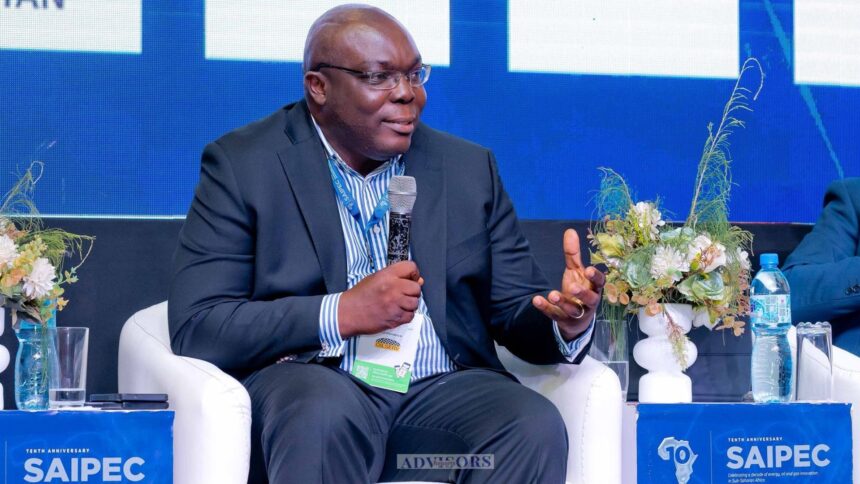
Oladimeji Bashorun, Chief Operating Officer of Energia Limited, has said indigenous operators are at the forefront of Nigeria’s energy transformation, leveraging deliberate strategies, bold investments and strong partnerships to de-risk operations and expand access to energy.
He made this remark at the just-concluded SAIPEC 2026 during a panel session titled “”Navigating Opportunity amid-Transition”, in Lagos.

Bashorun described the Petroleum Technology Association of Nigeria (PETAN), Independent Petroleum Producers Group (IPPG) and Oil Producers Trade Section (OPTS) as key pillar of the country’s energy security framework.
He added that strengthening partnerships has significantly helped the company to de-risk operations, particularly through collaboration with members of Petroleum Technology Association of Nigeria.
“We have done businesses of oil and gas production together with some PETAN members. So, we moved away from just a service provider model to a partnership that has worked,” he explained.
Bashorun cited a recent drilling campaign where contractor input directly reduced operational costs.
“I just drilled a well, and actually the contractor was the one that suggested if you do this in a certain way, you will be able to save money. And that has really helped us. So that is another strategy we deployed to de-risk.”
Bashorun further noted that after over 25 years in operation, Energia remains resilient and is expanding.
He said, “For us in Energia, we are the ambassadors and custodians of energy security in Nigeria and Africa at large,” he said.
“We believe the current generation is the generation that deserves access to development and energy, in and out.”
According to him, Energia’s growth strategy is built on deliberate execution. As one of the marginal field owners, the company partnered with one of its founding fathers to establish a gas plant.
“Because we see gas as the energy of the future, we are very deliberate.
“We take services from our founders with very high quality, and that’s one thing we don’t compromise — very high quality,” he stated.
Bashorun said another key pillar of the company’s strategy is maximising production, regardless of scale.
“We chase the barrel no matter how small as long as it is profitable. The hundred barrel is as important to me as a thousand barrel. The 50 barrel is as important also.
“We expanded reserves from just 1 million barrels at acquisition to over 60 million boe today.” he noted.
On regulatory engagement, he described the company’s relationship with the Nigerian Upstream Petroleum Regulatory Commission (NUPRC) as collaborative and supportive.
“As tenants to the NUPRC, which is the landlord and the regulator, the partnership has been very awesome.
“We commissioned a pipeline delivery line based on deadline. As the operator, we committed to achieving it within three months, and that was done. NUPRC has been very, very supportive,” he said.
Earlier, speaking at Nigeria International Energy Summit 2026 in Abuja, Bashorun urged Nigerian exploration and production (E&P) companies expanding into other African markets to become advocates of Nigeria’s upstream policy successes.
“When a Nigerian E&P company succeeds in a country like Angola, it becomes easier to identify the regulations that have shaped their corporate delivery,” he said.
He warned that failure abroad could weaken Nigeria’s case for deeper African energy integration.
“If we go to Senegal, Angola and other African countries as a Nigerian company and do not succeed, then it becomes more difficult to sell the need for integration.
So, beyond the regulatory mandate, it is also the responsibility of the operators that go to African countries to make sure they do well so that they can advocate the upstream policies that have helped to shape delivery.”
Bashorun further highlighted the role of industry advocacy groups such as Independent Petroleum Producers Group and Oil Producers Trade Section in fostering dialogue between operators and regulators.
“There is also the power of advocacy, and this is done through associations such as IPPG and OPTS.
They have helped regulators to have conversations that make our operations easier. What we should be selling to Africa beyond effective regulations is the power of advocacy,” he added.
He maintained that indigenous operators, through quality service delivery, strategic partnerships and disciplined investment, are positioning Nigeria as a model for sustainable energy development across the continent.