

…REA embarks on 1,000 mini-grid rollout under $750m World Bank-backed DARES programme
Oredola Adeola
Dr. Abba Aliyu, Managing Director and Chief Executive Officer of the Rural Electrification Agency (REA), has identified industrial-scale deployment of mini-grid renewable energy as Nigeria’s fastest pathway to sustained economic growth.
Speaking on the transformative impact of decentralised power solutions, Aliyu said, “A mini-grid that powers homes changes lives, but a mini-grid that powers homes, a rice mill, a cold room, a welding cluster, a clinic, a digital services hub, and a market changes an economy.
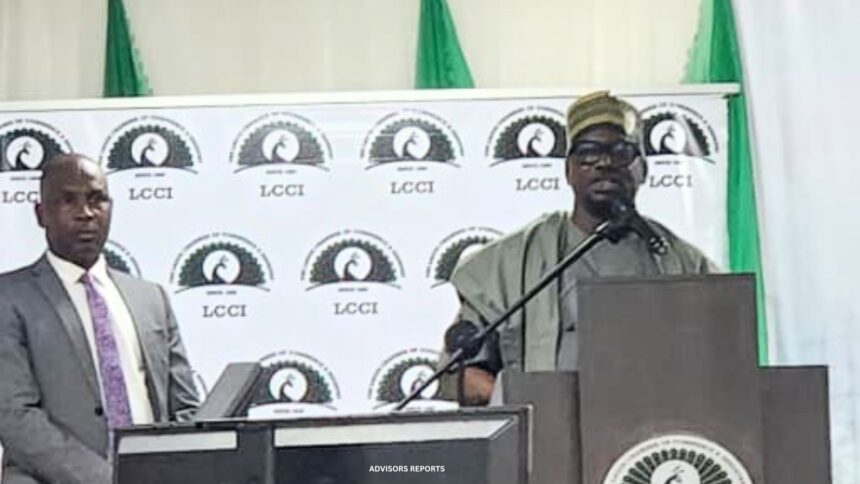
The REA’s MD/CEO made this known on Wednesday while delivering a keynote address titled “Scaling Mini-Grids and Solar Infrastructure for Industrial Production” at the Lagos Chamber of Commerce and Industry (LCCI) Renewable Energy Outlook Conference in Lagos.
Dr. Aliyu emphasized that Nigeria’s industrial competitiveness will hinge entirely on its ability to build reliable, affordable, and scalable electricity systems.
“Scaling mini-grids and solar infrastructure for industrial production is not about choosing between the grid and off-grid systems.”
“It is about designing a smarter power system that uses every viable tool available.
Dr. Aliyu emphasised that Nigeria requires a comprehensive and integrated energy mix spanning the national grid, gas, hydropower, solar, energy storage, embedded generation, mini-grids, private capital, local manufacturing, as well as improved data and coordination to achieve sustainable power development.
The REA MD further noted that the renewable energy market of the future will look radically different from the power architecture of the past.
He emphasized that regulation must remain forward-looking enabling commercial innovation while protecting consumers and preserving market discipline for the future.
He pointed to recent regulatory milestones by the Nigerian Electricity Regulatory Commission (NERC) as critical instruments moving the market from small pilot projects to industrial-scale deployment.
These according to him, include net billing frameworks and updated regulations that expand the capacity threshold for interconnected mini-grids from 1 megawatt (MW) up to 5MW.
“This expanded capacity creates room for factories, residential estates, market clusters, universities, and data centers to integrate seamlessly into a flexible power network,” he said.
Reiterating the REA’s commitment to facilitating a transparent investment pipeline, Dr. Aliyu called on the private sector to move from passive consumers to active solution structures.
“A mini-grid that powers homes changes lives, but a mini-grid that powers homes, a rice mill, a cold room, a welding cluster, a clinic, a digital services hub, and a market, changes an economy,” Dr. Aliyu explained.
Aliyu also urged commercial banks and financiers to innovate beyond basic equipment asset financing.
Instead, he urged the financial sector to begin offering project preparation funds to bring early-stage concepts to bankability, local currency facilities to mitigate foreign exchange risks, and carbon revenue monetization pathways alongside green premium instruments.
Dr. Aliyu highlighted that while the government can set policies, the speed and scale of deployment will ultimately depend on the active involvement of entrepreneurs, financiers, and industrial consumers.
The REA is currently embarking on the largest interconnected mini-grid rollout in the country’s history, with over 1,000 mini-grids actively under development.
This massive deployment is funded via the $750 million Distributed Access through Renewable Energy Scale-up (DARES) program, which is administered by the REA and backed by the World Bank.
Alongside this rollout, the agency has finalized the strategic framework for the National Electrification Plan, serving as the operational anchor for universal electricity delivery.
The REA recently submitted a comprehensive report to the Minister of Power after mapping households across Nigeria using geospatial data to determine the absolute least-cost model required to supply electricity nationwide.
Stressing that Nigeria cannot build a sustainable energy future on permanent import dependence, Dr. Aliyu revealed a major push toward industrial localization.
Under the Nigeria First policy framework, the REA is leveraging its massive deployment pipelines to serve as anchor demand for local assembly, technical skills, and manufacturing.
The agency announced that a 3.7GW domestic renewable energy manufacturing capacity is already in the pipeline, with strategic production hubs being established across Lagos, Ogun, Bayelsa, and Kano states.
Dr. Aliyu concluded by urging the private sector to step forward and capitalize on this ripe investment environment to secure Nigeria’s industrial future.