
… warns against political interference, calls permit issuance by aides ‘an aberration’
… market distortions emerge as improper licensing, regulatory gaps surface in Imo, Edo
Oredola Adeola
Nigerian Electricity Regulatory Commission (NERC) has raised alarm that several states granted electricity regulatory autonomy months ago are yet to formally constitute independent State Electricity Regulatory Commissions as required under the Electricity Act 2023.
The Commission has therefore cautioned that government officials and political appointees performing regulatory functions outside the legal framework risk undermining investor confidence, market stability and the integrity of Nigeria’s ongoing power sector decentralisation.
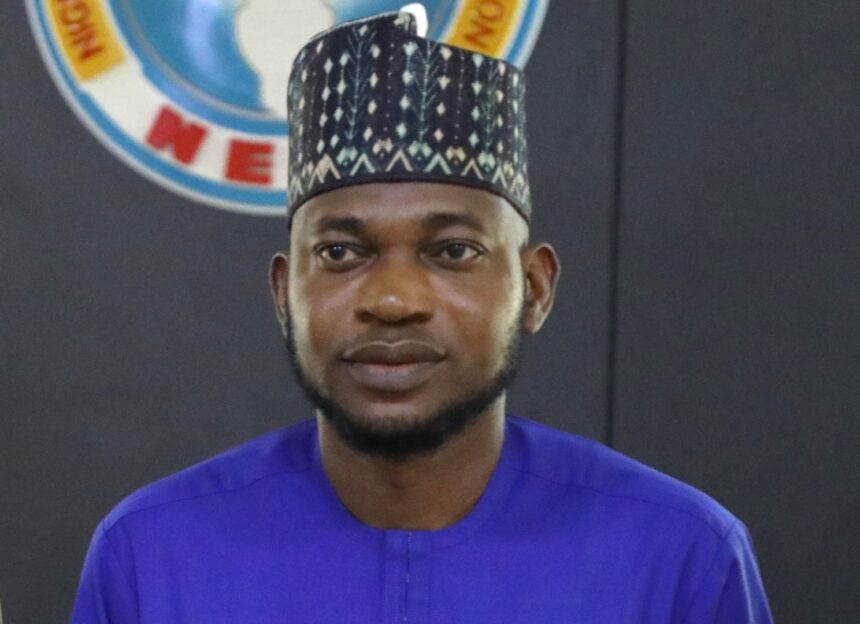
Oseni made the remarks during a just-concluded 3-day capacity building workshop and interface with State Electricity Regulators for CSOs, and Consumer Advocacy Group organised to strengthen collaboration between advocacy organisations and regional power regulators, held in Ibadan, Oyo State.
Oseni said, “Some states received regulatory transfers about four to six months ago. However, as of today, there is no regulatory commission in place in certain states, even though they have been granted autonomy.
“I recently saw a permit issued by a Special Assistant to a state government, granting regulatory approval to someone intending to engage in electricity trading,”
He therefore emphasised that such actions are aberration to the rule of law, insisting that there is need to seriously examine such actions.
Oseni said, “In line with the transition framework, we closed our NERC zonal offices in those states after transferring authority to the State Electricity Regulatory Commissions (SERCs).
“That was the proper process. But unfortunately, in some cases, there is currently no functioning regulator in place.
“I am not certain whether the relevant ministries are handling these responsibilities, but these are issues of concern,” he said.
The NERC Chairman further said, in Imo State, for example, the state regulator has been unable to license the sub-company of the Enugu Electricity Distribution Company, the original distributor operating in the state.
He said, “Yet within two or three weeks of their establishment, they issued other licenses without having proper processes in place. They licensed operators to generate, transmit, and distribute electricity for years without the necessary institutional structures. That presents a significant challenge.
“This situation is also happening in Edo State. Apart from the absence of a fully functional regulator or delays in licensing operators, many states are grappling with limited understanding of how the electricity market operates,” he said.
Oseni explained that once a state receives regulatory transfer, NERC withdraws in line with the law.
“For those states, we have closed our NERC zonal offices because that is what should happen. We transferred authority to the State Electricity Regulatory Commission and closed our offices.
But in some of those places, there is currently no regulator in place.”
He warned that allowing ministries or political appointees to perform regulatory duties outside the framework of the Act creates legal and market risks.
The NERC Chairman said, “For instance, in one of the states issued licenses, the regulator licensed a new electricity distribution company, which is within their constitutional power.
“However, an existing distributor had a distribution line radiating from an injection substation to supply an industrial customer at the end of the feeder.
“When they reconciled their meter readings from the injection substation with the consumption of their customer, they discovered a significant gap that could not be explained by technical losses.
“Upon patrolling the line, they found that two additional industrial customers had been illegally connected to the same line. These customers were consuming electricity supplied by the existing DisCo but paying the newly licensed operator instead.
“Meanwhile, the Nigerian System Operator continued to record the energy at the substation against the existing distributor’s account. This creates serious market distortions,” the NERC Chairman said.
Oseni further noted that no one disputes the constitutional powers of the states.
He said, “However, electricity operations remain interconnected with the national grid and the wholesale market. A distribution line cannot off-take power without having a contract with a generator, which remains under NERC’s purview. That was why we intervened in that matter, and discussions are ongoing.
“Investors will not commit funds where the law does not grant sufficient powers to the regulator or where the regulator appears to pursue popularity rather than sound regulatory principles.
“We are working to amend and strengthen relationships between the Commission and state regulatory commissioners. We have held several meetings and are building mutual understanding on how to move forward and collaborate effectively,” he said.
He has therefore called on the Civil Society Organisations (CSOs) to collaborate in helping address issues such as lack of properly constituted state regulators, improper licensing, and regulatory gaps in several states.
He charged them to advocate for strong, independent state regulatory laws to prevent undue political interference.
According to him, “Many of you have media platforms, friends in the media, and public engagement spaces. There are developments in some states that require urgent attention.