
… as Qatar stops LNG, Israeli, Iraqi oil fields halt output- Precautionary shutdowns
Oredola Adeola
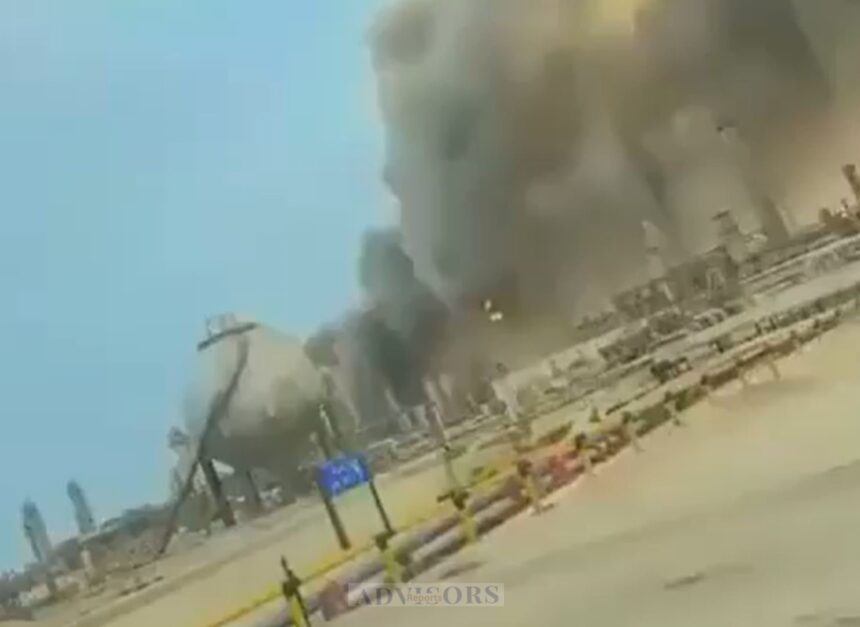
The Israel–US–Iran war, which began on February 28, 2026, recorded its first reported energy-infrastructure incident on Monday, March 2, 2026, as Iranian drones struck near the Ras Tanura Refinery in Saudi Arabia, the kingdom’s largest and most strategic oil-processing facility.
The incident followed Iran’s missile and drone retaliation against Israeli targets, U.S. military bases, and Gulf states hosting U.S. military assets, marking a significant expansion of the conflict into critical energy infrastructure.
Saudi authorities said most of the incoming drones were intercepted by air defence systems, while limited fires caused by falling debris prompted a precautionary shutdown of parts of the facility. Local media reported that no major damage or injuries were recorded.
The Ras Tanura Refinery, which has a processing capacity of about 550,000 barrels per day, is regarded as a cornerstone of Saudi Arabia’s refining system and a critical node in global fuel supply chains.
The attack represents a clear escalation of the conflict, constituting the first direct strike on Gulf energy infrastructure, excluding earlier Iranian missile and drone attacks on Dubai and the wider UAE that resulted in blasts, falling debris, disrupted airports, and reported casualties.
Despite the incident, industry sources indicated that the immediate impact on Saudi Arabia’s overall refining output may be limited due to the kingdom’s extensive domestic refining capacity and operational redundancy.
Saudi Arabia operates eight other major refineries, including SATORP in Jubail, YASREF in Yanbu, SAMREF in Yanbu, the Jazan Refinery, Petro Rabigh, SASREF in Jubail, the Yanbu Refinery, and the Riyadh Refinery. Combined, these facilities give the country an estimated domestic refining capacity of about 3.29 million barrels per day.
While the Ras Tanura incident has heightened geopolitical risk and increased market sensitivity, analysts believe a sustained impact on global oil supply would require prolonged disruptions or coordinated attacks on multiple energy facilities.
The escalation of the Iran conflict—now entering its third phase with no clear pathway to de-escalation—has reinforced instability in a region central to global energy security.
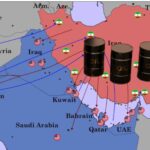
This uncertainty has been amplified by reported disruptions around the Strait of Hormuz, a strategic passage through which roughly 20% of global oil supply transits, sending renewed volatility shocks through global energy markets.
According to Reuters, Qatar on Monday suspended its liquefied natural gas production as part of precautionary shutdowns of oil and gas facilities across the Middle East.
Qatar’s LNG output accounts for roughly 20% of global supply and plays a crucial role in meeting both Asian and European demand for the fuel.
In Iraqi Kurdistan, most oil production, including exports of around 200,000 barrels per day (bpd) via the pipeline to Turkey’s Ceyhan port in February, was halted as a precaution.
Companies affected include DNO (DNO.OL), Gulf Keystone Petroleum (GKP.L), Dana Gas (DANA.AD), and HKN Energy.
Offshore Israel, the government directed Chevron (CVX.N) to temporarily shut down the Leviathan gas field, where capacity is being expanded to approximately 21 billion cubic metres per year under a $35 billion export agreement with Egypt.
A Chevron spokesperson confirmed that its facilities, including the Tamar gas field, remain safe.