
… pledges 2–2.5bcf/d supply to NLNG trains 1–7, plans major boost in domestic gas output
“We plan expansion into midstream, downstream value-addition (refining) – Mijinyawa, VP
Tony Attah, Managing Director and Chief Executive Officer of Renaissance Africa Energy Company, who was represented by Abdulrahman Mijinyawa, Vice President, Development, Wells and Technology, outlined how the company successfully reduced community exposures, grievances, perforation incidents and oil theft across its extensive onshore footprint in the Niger Delta.
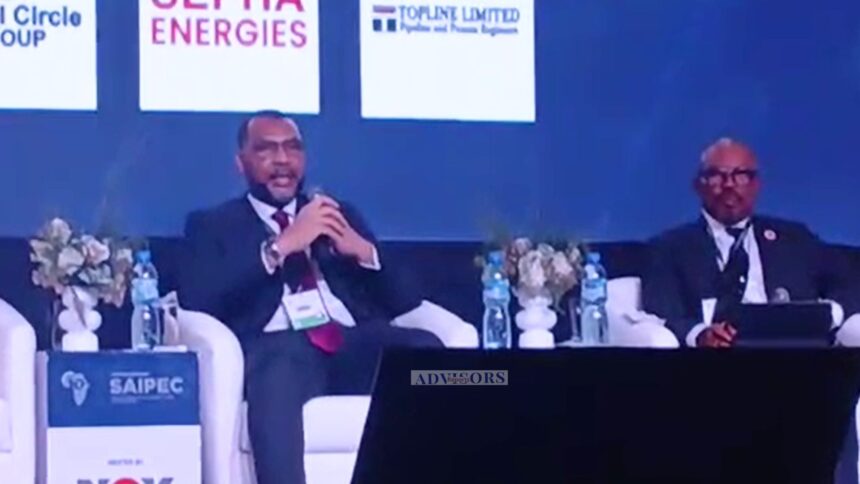
Speaking at the Energy CEOs Live session moderated by Engr. Obi Uzu, Vice Chairman of PETAN, on the sideline of the Sub‑Saharan Africa International Petroleum Exhibition and Conference – #SAIPEC2026 – in Lagos, Mijinyawa also highlighted Renaissance’s forward-looking plans to ramp up production, boost national revenue and create more employment opportunities.
What is the central focus of Renaissance amidst energy addition and the need to address Africa’s energy security challenges?
At Renaissance, our central focus is enabling energy security in a continent where a significant portion of the population remains energy poor. The key question for us is: how do we ensure reliable energy supply while addressing that gap?
Beyond security of supply, we are also focused on enabling industrialisation locally. Africa is privileged to have significant gas resources, and the challenge is how to make those resources work for our people — to drive economic growth, create jobs and strengthen domestic industries.
Sustainability is equally critical. While we are talking about energy addition and acknowledge that the transition must be just, we also recognise that we operate in a world far more advanced than when oil and gas production first began decades ago. Therefore, we are committed to growing production responsibly and sustainably.
Our vision is anchored on strong core values captured in an acronym: CRISP
Collaboration and partnership — working internally with our staff and externally with our GED partners, regulators and host communities to unlock the full potential of our portfolio.
Respect — treating our employees and communities with dignity.
Integrity — always doing the right thing, even when no one is watching.
Safety — which has been elevated to a core value, ensuring the safety of our people, processes and the environment.
Performance — ultimately delivering results and increasing production from the current 1.7 million barrels of oil per day towards 2 and even 3 million barrels per day.
These principles guide how we address Africa’s energy security challenges while driving sustainable growth.
Transitioning an asset from an IOC to a new operator is often complex. What have been the key lessons from the handover so far, particularly around safety, workforce continuity and stakeholder engagement? How were you able to manage these complexities while positioning the company for future growth?
The transition from an international oil company to a new operator is indeed highly complex, especially in an industry constantly exposed to hazards — risks to people, processes and the environment. For us, safety was absolutely central to the entire process.
We adopted a simple three-point philosophy: receive safely, stabilise the company and prepare for growth.
One of our strongest competitive advantages was inheriting SPDC as a complete organisation, including its workforce. Having experienced personnel already familiar with the systems and processes allowed us to maintain operational continuity while reinforcing a strong safety culture.
Our focus was clear — ensure the safety of our people, safeguard our processes and protect the environment.
We also recognised that the transition was multidimensional. Employees were going through multiple layers of change — professionally and personally.
Many had spent their entire careers under Shell, and suddenly they were part of a new operating entity. Their families were also indirectly affected.
Beyond staff, the company itself was undergoing ownership change from Shell to Renaissance. At the same time, joint venture partners, host communities, regulators and contractor partners were all adjusting to engaging with a new operator.
Each stakeholder group required deliberate engagement, reassurance and structured communication to ensure systems and processes were aligned for a safe takeover.
By carefully managing these dimensions and maintaining a strong safety focus, we successfully transitioned without recording any major incidents. We then moved into the stabilisation phase, where operational performance significantly improved.
Production increased from about 140,000 barrels per day to approximately 265,000 barrels per day — a substantial uplift achieved largely through short-term interventions.
With a clear long-term growth vision already in place, the company is now well positioned to build on this momentum and drive further expansion in the future.
These are mature assets with significant infrastructure. What operational or technical capabilities does Renaissance bring to maximise value, extend field life and maintain efficiency and reliability?
That is a very important question, particularly when discussing mature or brownfield assets. While these assets have been in operation for decades, we believe there is still significant “running room” and untapped potential.
From an operational standpoint, we have a highly experienced production team supported by competent contractor partners.
Many of these capabilities were inherited and strengthened from the Shell foundation, giving us continuity and deep institutional knowledge of the assets, systems and processes.
At the subsurface level, we possess strong exploration and reservoir evaluation capabilities. This enables us to identify new opportunities within existing fields and optimise recovery from mature reservoirs.
On the projects and engineering side, we have robust expertise across both greenfield and brownfield developments. For example, our greenfield development work — including projects like OML 21 (Assa North, which is nearing start-up — demonstrates our ability to bring new assets onstream.
At the same time, our brownfield engineering capabilities ensure the integrity and longevity of pipelines, terminals and other critical infrastructure that have been operating for decades.
In addition, we maintain a strong supply chain function that ensures operational continuity, reliability and efficiency across the asset base.
Equally important is our structured external stakeholder management framework, which ensures smooth engagement with regulators, joint venture partners, host communities and contractors.
When these operational, technical, supply chain and stakeholder management capabilities come together, they position us to restore asset integrity, maximise value and extend field life.
With these foundations in place, the business becomes bankable and attractive to investors, reinforcing our confidence that the long-term outlook for these assets remains very bright.
Looking ahead five to ten years, what does success look like for Renaissance Africa Energy Company?
It’s always difficult to make predictions, but our vision for success over the next five to ten years is clear and structured around stabilisation, growth and long-term impact.
In the immediate to medium term — between now and the end of the decade — success means consolidating the transition, stabilising operations and positioning the business firmly for growth.
Our target is to roughly double production to about one million barrels of oil equivalent per day, with approximately half coming from oil and the balance from export and domestic gas.
We also intend to sustain our commitment to NLNG Trains 1 to 7 at about 2 to 2.5 billion cubic feet (bcf) per day, while significantly scaling up domestic gas production.
Domestic gas will form a critical foundation for Nigeria’s industrialisation agenda and broader economic development.
Beyond increasing volumes, success means moving further along the value chain. Over time, we aim to go beyond commodity extraction and export into value addition — building a more integrated presence in the midstream and downstream sectors.
This will create more local opportunities, deepen Nigerian content and generate employment.
Ultimately, success for Renaissance will not be defined only by the number of barrels produced or cubic feet of gas delivered. It will be measured by how many jobs we create, how many homes we energise, how many graduates we employ and how many local companies we empower.
Our ambition is to make a tangible difference in Nigeria first — and then leverage that success as a platform for broader continental expansion.