
…says, through Train 1–6, we are boosting Nigeria’s revenue and driving national development”
“Energy transition in African context means focusing on additional energy”- Anowi
Oredola Adeola
NLNG is a perfect example of gas monetisation in Africa, with its Train 1–6 operations cutting Nigeria’s gas flaring from about 62 percent to less than 12%, while boosting revenues and driving development, Nnamdi Anowi, General Manager, Production, has disclosed.
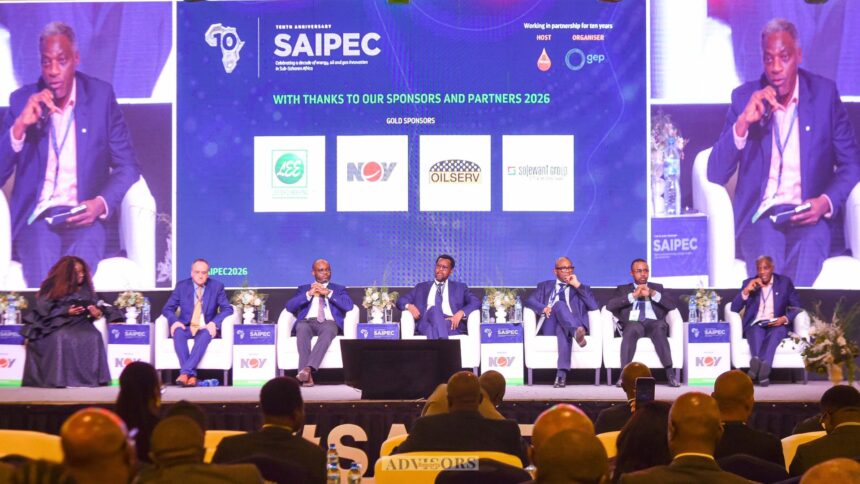
Anowi made this known while speaking at a panel session titled “De-Risking Investments in African Oil and Gas Projects” during the Sub-Saharan Africa International Petroleum Exhibition and Conference (SAIPEC) in Lagos.
According to him, NLNG is considering Trains 8 and 9 to further monetise Africa’s natural gas resources and sustain development gains.
The NLNG’s General Manager, Production, said, “Our approach to gas projects at NLNG is anchored on revenue certainty, which is central to de-risking investments.
“For instance, with Train 7, investors had to clearly understand the revenue source, and without long-term gas delivery contracts, no investor would fund such projects.
“Governance is also critical — investors need confidence in your strategy, team, and experience before committing funds.
“On construction, project managers must move projects off their balance sheets through fixed contracts rather than EPC arrangements, ensuring delivery as agreed.
“In addition, scoping and design must go beyond preliminary stages to provide clarity and confidence to investors,” Anowi said.
Speaking on energy transition in the African context, Anowi said it must be just and pragmatic, stressing that transition is a means of decarbonising Africa, not denying it development, noting that ‘a hungry man cannot be asked to fast.’
He explained that global conversations have shifted to energy addition, especially with the rapid growth of data centres — half of which are in the US — all requiring massive power supply.
Anowi added that renewable energy alone cannot meet this demand, emphasizing that Africa must develop using its natural resources while focusing on expanding total energy supply.
The NLNG’s GM Production has therefore warned that when oil and gas projects are perceived as overly risky, investors withdraw, resulting in stalled projects, job losses, and lost revenue opportunities vital to national growth.
He stressed that reducing risk in the sector is not merely a business consideration but a matter of national importance for Nigeria’s economy, energy security, and long-term development.
He explained that for NLNG, lowering risk translates into maintaining reliable gas supply, honouring long-term contracts, and sustaining its reputation as a dependable supplier to both global and domestic markets.
According to him, effective de-risking begins with clear and consistent government policies, enforceable contracts, and thorough project preparation before capital is committed, enabling banks and investors to finance projects at lower costs for the benefit of the country.
He further underscored the role of strong infrastructure, skilled local manpower, and modern technology in minimising operational risks, noting that efficient pipelines, processing facilities, and digital systems make projects safer, more cost-effective, and dependable over time.
He added that coordinated efforts to reduce risk would attract investment, stressing that the coming decade should prioritise expanding proven, bankable projects that deliver tangible national value.